In this glossary, you will find vocabulary and key concepts from "Chapter Six Summary" on page 361 of your book "Heat transfer, a practical approach".
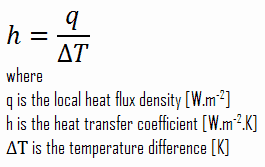
Convection heat transfer coefficient
noun
Is the rate of heat transfer between a solid surface and a fluid per unit surface area per unit temperature difference.
Example: The convection heat transfer coefficient, h, is usually a positive, experimentally determined value.
es: Coeficiente de transferencia de calor por convección
Critical Reynolds number
noun
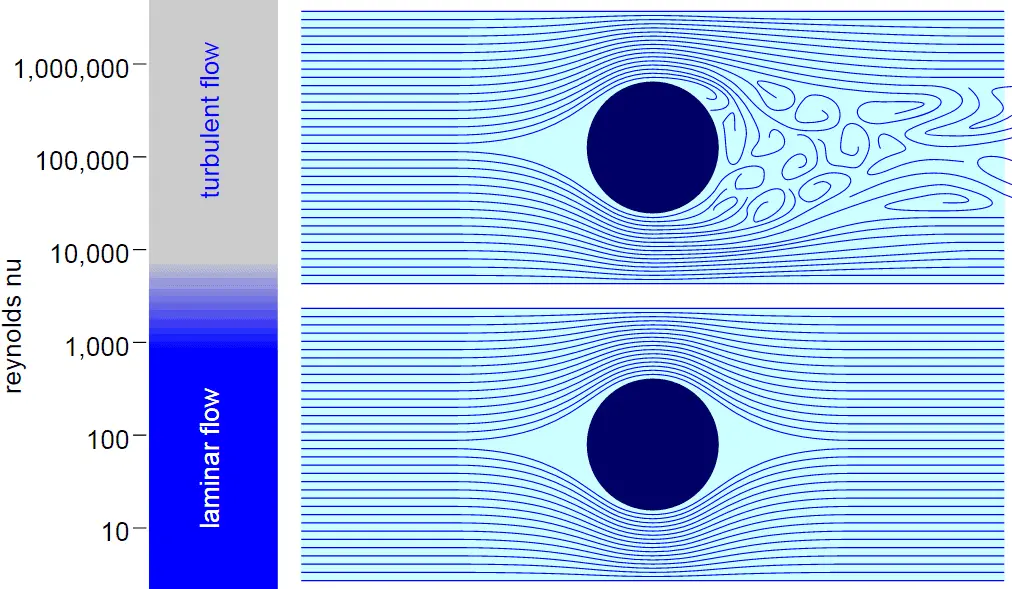
Is determined as a limit where the laminar flow changes to turbulent flow.
Example: The Reynolds number at which the flow becomes turbulent is called the critical Reynolds number.
es: Número crítico de Reynolds
Friction coefficient
noun
Is a dimensionless number that is defined as the ratio between friction force and normal force.
Example: High modulus polyurethane compound with a high friction coefficient.
es: Coeficiente de fricción
Kinematic viscosity
noun
Is defined as the dynamic viscosity divided by density and is the ratio of viscous forces to inertia forces.
Example: In order to calculate the kinematic viscosity from the dynamic viscosity, the density of the sample must be known.
es: Viscosidad cinemática
Laminar flow
noun
Is the highly ordered fluid motion characterized by smooth streamlines.
Example: The rounded shape of the cupola allows better laminar flow compatibility.
es: Flujo laminar
Nusselt number
noun
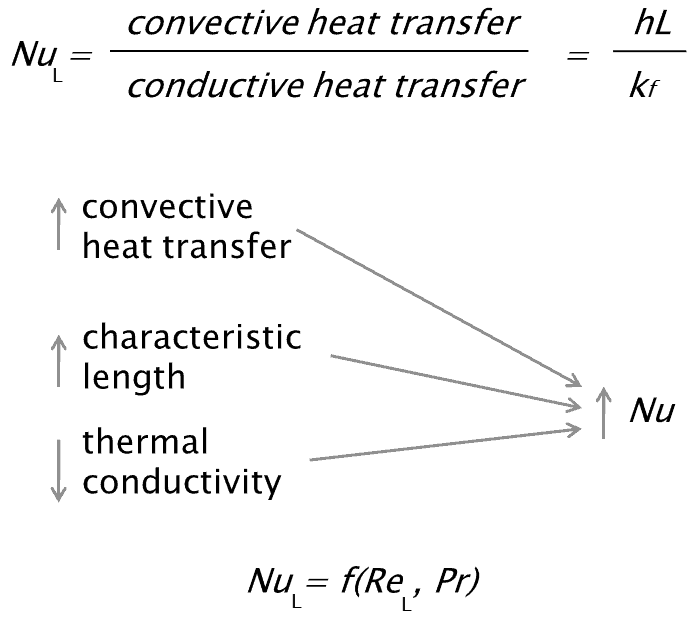
Is the dimensionless heat transfer coefficient. Is defined as the ratio of convection heat transfer to fluid conduction heat transfer under the same conditions.
Example: Nusselt number is an important parameter that can contribute to a better rate of heat exchange.
es: Número de Nusselt
Prandtl number
noun
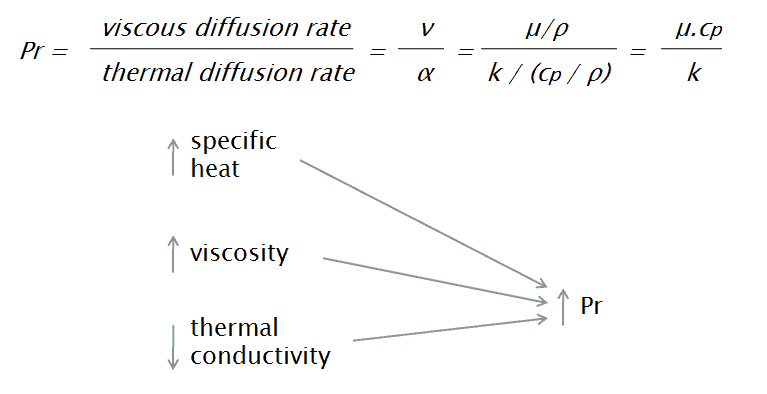
Is defined as the ratio of momentum diffusivity (kinematic viscosity) to thermal diffusivity.
Example: The relative thickness of the velocity and the thermal boundary layers are best described by the dimensionless Prandtl number.
es: Número de Prandtl
Reynolds number
noun
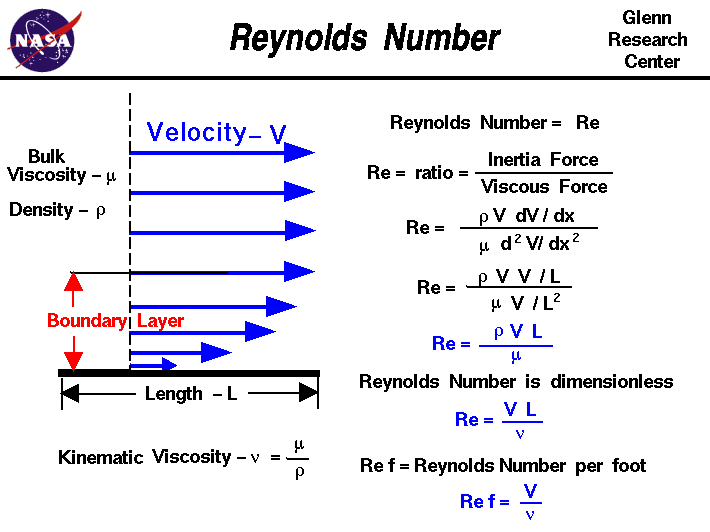
Is a dimensionless number used to categorize the fluid systems in which the effect of viscosity is important in controlling the velocities or the flow patterns of a fluid.
Example: The Reynolds number is used to determine whether a fluid is in laminar or turbulent flow.
es: Número de Reynolds
Shear stress
noun
Is the friction force per unit area.
Example: Energy is lost from the fluid by the action of overcoming the frictional force produced by the shear stress.
es: Esfuerzo cortante, Tensión de cizalladura
Turbulent flow
noun
Is the highly disordered fluid motion that typically occurs at high velocities, is characterized by velocity fluctuations.
Example: These analogies are also applicable approximately for turbulent flow over a surface, even in the presence of pressure gradients.